
We provide exceptional logistics solutions across 48 states and Canada.
Our company specializes in comprehensive freight hauling services across the United States, ensuring reliable and efficient transportation solutions for your business needs. We operate extensively in all 48 states & Canada providing a seamless logistics experience from coast to coast.
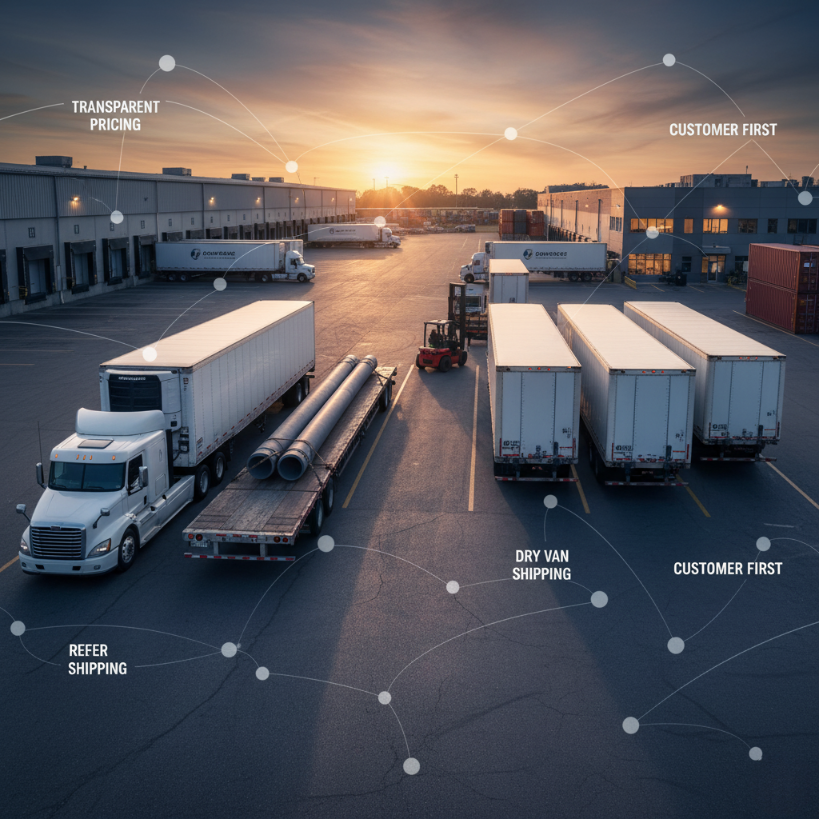
Our Service Offerings
We create transportation solutions that align with your needs — whether it’s same day, next day, contract freight or project based service.
- Full Truckload (FTL): Dedicated transportation for large shipments, ensuring timely delivery and minimal handling.
- Less Than Truckload (LTL): Cost-effective options for smaller shipments, consolidating freight to optimize routes and reduce expenses.
- Specialized Freight: Handling of sensitive, oversized, or hazardous materials with utmost care and compliance with safety regulations.
- Expedited Shipping: Fast and urgent deliveries for time-sensitive cargo, ensuring your freight reaches its destination promptly.
Coverage and Reach
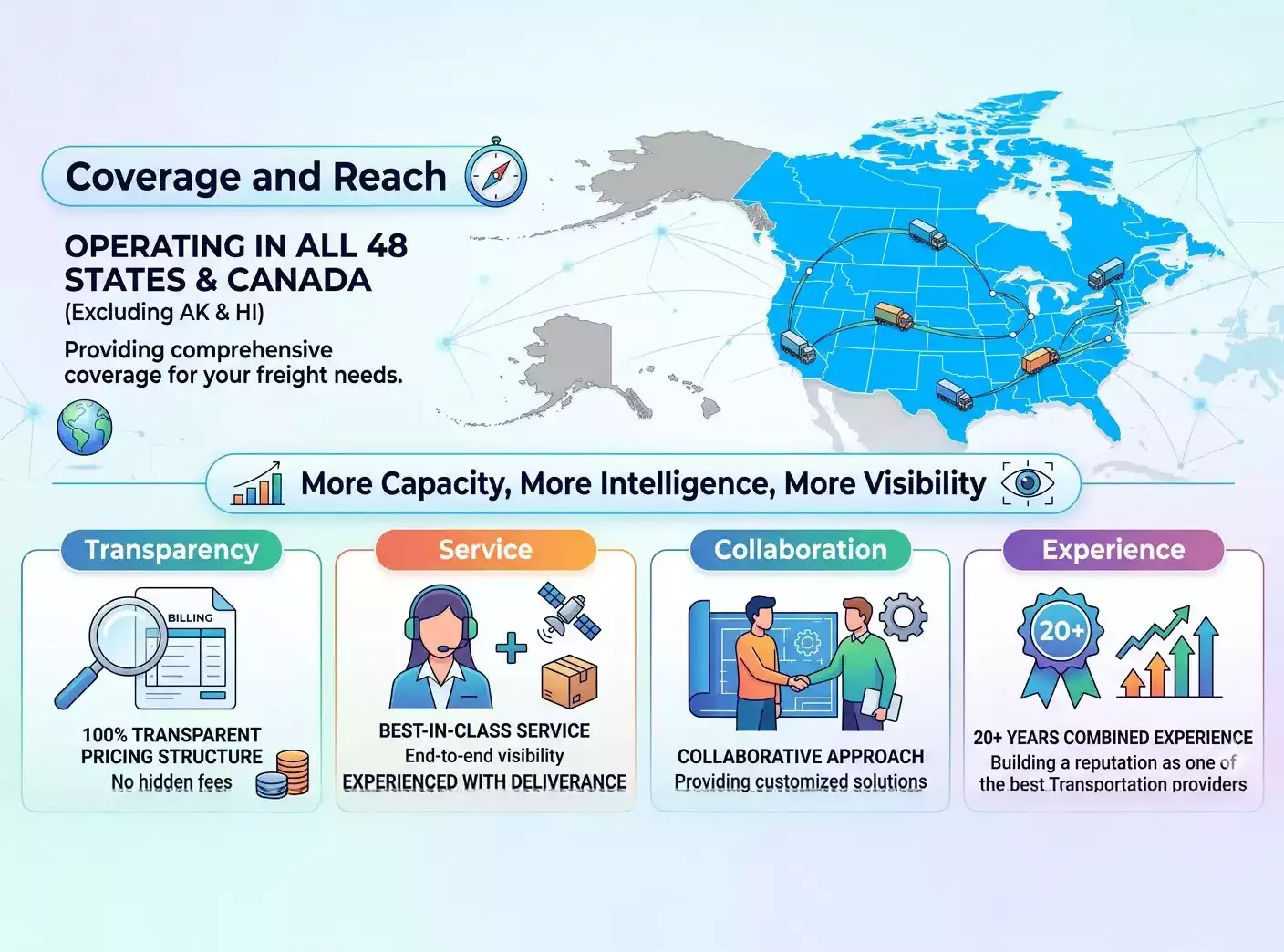
Our extensive network allows us to operate in all 48 states & Canada, excluding only Alaska and Hawaii, providing comprehensive coverage for your freight needs. Whether you are located in the eastern seaboard, the Midwest, the South, or the West Coast, we have the capacity and expertise to manage your shipments efficiently.
More Capacity, More Intelligence, More Visibility

Transparency
100% transparent pricing structure with no hidden fees

Service
Best-in-class service paired with end-to-end visibility
Experienced with Deliverance

Collaboration
Collaborative approach to providing customized solutions

Experience
20+ years combined experience in building a reputation as one of the best Transportation providers
Spot Quote
- Immediate Need: Urgent or one-time shipment
- Market-Based Pricing: Rates change daily
- Fast Response: Minutes to hours
- One-Time Load: No long-term commitment
- High Flexibility: Great for last-minute loads
RFQ & RFP
Key Features of an RFQ:
- Clear Scope: Defined lanes, volumes, and requirements
- Price-Focused: Main goal is competitive pricing
- Formal Process: Sent to multiple vendors for bids
- Structured Bidding: Easy comparison of rates
- Contract-Based: Used for regular lanes
- Tactical Approach: Focus on lane pricing
Key elements of an RFP:
- Project Description: Clearly states the project's goals, scope, and requirements.
- Vendor Requirements: Specifies the qualifications, experience, and resources vendors should have.
- Proposal Format: Outlines the structure and content expected in the vendor's response.
- Evaluation Criteria: Defines how proposals will be evaluated, including factors like cost, technical expertise, and experience.
- Timeline: Sets deadlines for submitting proposals and making decisions.
- RFP vs. RFQ: An RFP (Request for Proposal) is for complex, comprehensive solutions, while an RFQ (Request for Quote) is used specifically to obtain pricing for well-defined goods.
Why Customers Choose RCL
Excellent Service
We have dedicated teams to address all your needs, from initial implementation to ongoing customer support.
Affordability
Get the best value in trucking Capacity procurement.
Integration Capabilities
We are constantly offering new integration options, including API,EDI, QuickBooks, and more.
Centralized Data
Our technology integrates multiple professional transportation services into one centralized, user-friendly platform.
Improved Communication
Our mobile app for drivers provides two-way messaging, trip planning, document uploading and more.
Increased Savings
With an unbeatable range of functions at an affordable price, you can save thousands on technology and operating expenses.
Real Time Tracking
Transparency with Driver, where the actual cargo location is during transit.
The advantages of using RCL
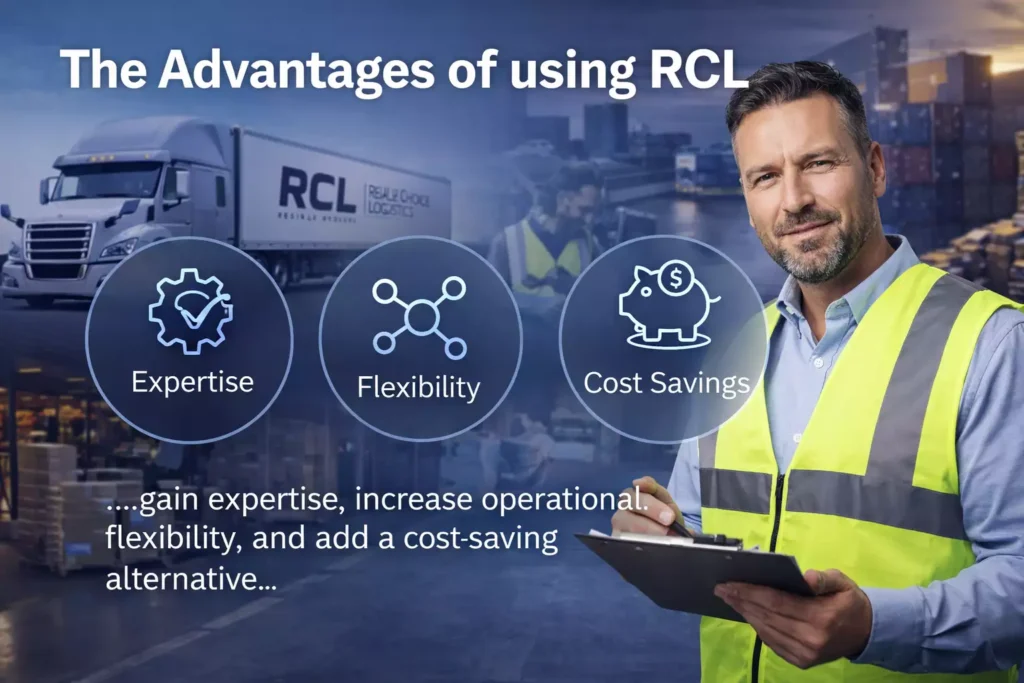
When you work with RCL, a quality freight broker, you gain expertise, increase operational flexibility, and add a cost-saving alternative that you may not have when working directly with a carrier. Working with RCL can ensure you have a team in your corner to help you navigate even the most unique shipping challenges.
INTERMODAL SHIPPING
How does INTERMODAL SHIPPING compare to full truckload (FTL) shipping?
Intermodal shipping typically takes longer than FTL because it involves multiple handoffs between transportation modes. However, it can be more cost-effective, especially for long-distance shipments, and is less affected by driver shortages and fuel price fluctuations. FTL, on the other hand, offers faster transit times and more direct routing.
- Refrigerated Freight: Refrigerated freight refers to temperature-sensitive goods transported in refrigerated trailers or containers, ensuring items like food, pharmaceuticals, and chemicals remain within a controlled temperature range during transit. This service is essential for products that require constant cooling or freezing.
- Drayage: Drayage shipping refers to the short-distance transportation of cargo, typically moving freight from ports, rail yards, or warehouses to its next transportation hub or final destination. It plays a crucial role in the supply chain by facilitating the transfer of goods between different shipping modes.
- Drop Trailer: Drop trailer shipping is a logistics method where a carrier drops an empty trailer at a Shipper /Receiver’s facility for loading or unloading at their convenience. The carrier then returns later to pick up the loaded or emptied trailer, reducing wait times and increasing efficiency.
- Oversized/Overweight Freight: Oversized/Overweight freight shipping refers to transporting cargo that exceeds the standard legal size and weight limits for trucks, requiring specialized equipment, permits, and routing. It is commonly used for large machinery, construction equipment, industrial components, and prefabricated structures or more.